
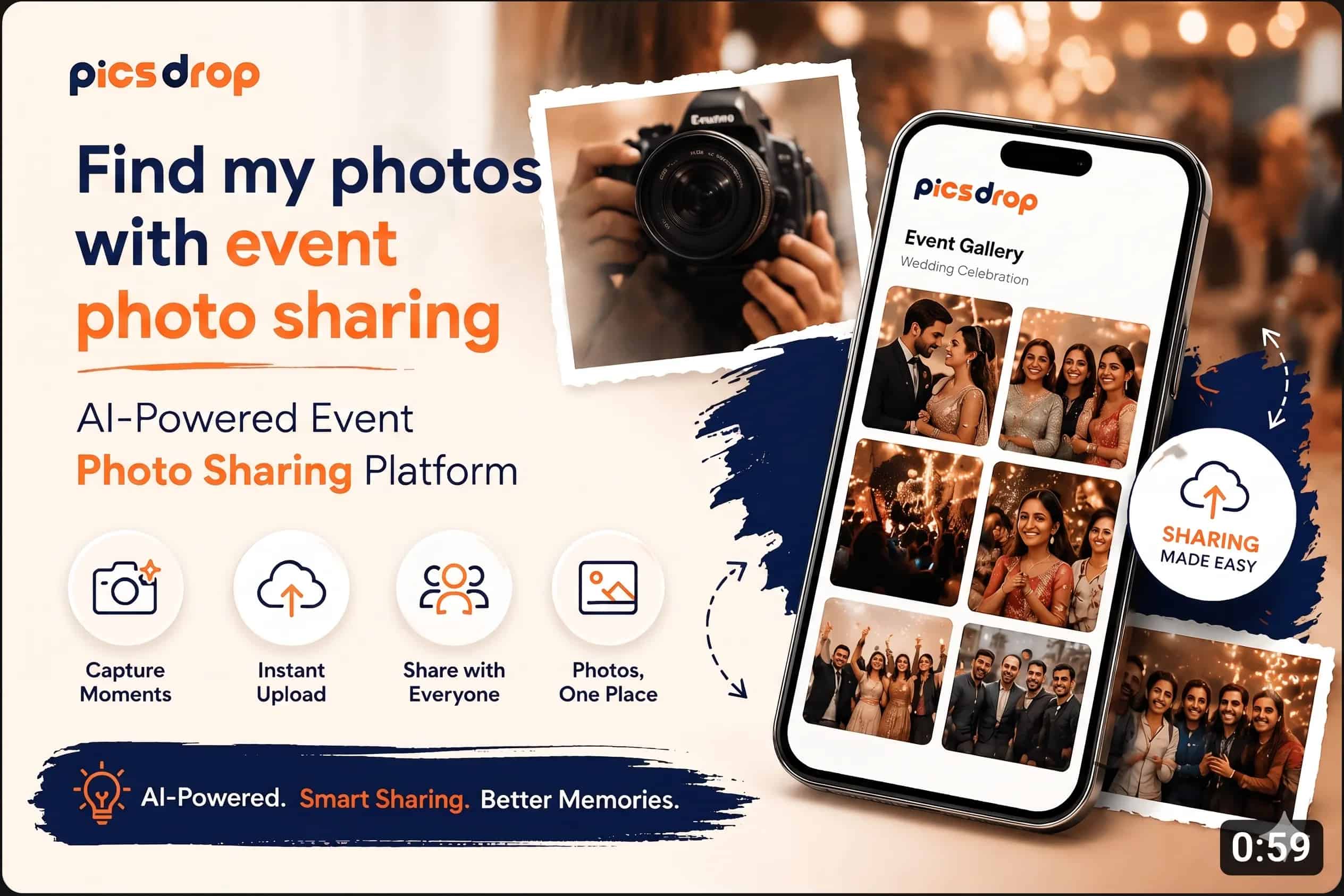
Share Event Photos Using Face Recognition. The Smarter Way to Distribute Memories
Want to share event photos using face recognition? Learn how AI technology helps guests find their own photos instantly with just a selfie. No app needed.
After a big event, the photographer delivers 1,500 photos. Organizer puts them in a Google Drive folder and shares the link with everyone. What happens next? Guests scroll through hundreds of photos, get bored halfway, give up. Most photos never get seen. This is the real problem with traditional event photo sharing. And this is exactly why share event photos using face recognition is becoming the go-to method for photographers and event organizers both.
The idea is simple. Guest clicks a selfie. AI matches their face with photos from the event. They get their own personal gallery in seconds. No scrolling, no hunting, no frustration.
What Exactly Is Face Recognition Based Photo Sharing
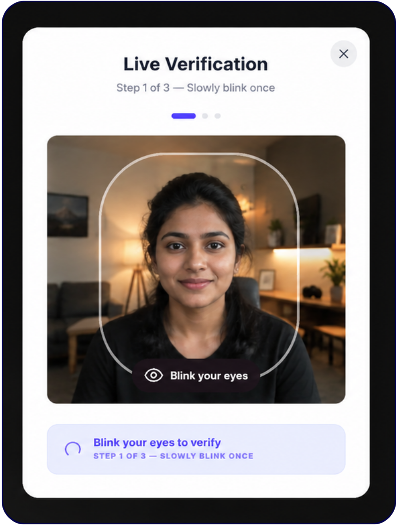
So basically what happens is the platform scans every photo uploaded by the photographer and creates a digital face map for each person visible in those photos. When a guest comes to find their pictures, they just take a selfie. AI then matches that selfie against the whole database.
The technology itself works on facial geometry. Things like distance between eyes, shape of jawline, nose structure. These features are unique for each person, so the matching is quite accurate. Some platforms claim accuracy above 99% even for blurry photos, group shots, side profiles, or even photos where person is wearing a mask.
What happens is the AI does not need a perfect photo to recognize someone. It can identify person from angle shots, photos with partial face, photos from distance both.
How the Process Works for Event Organizers
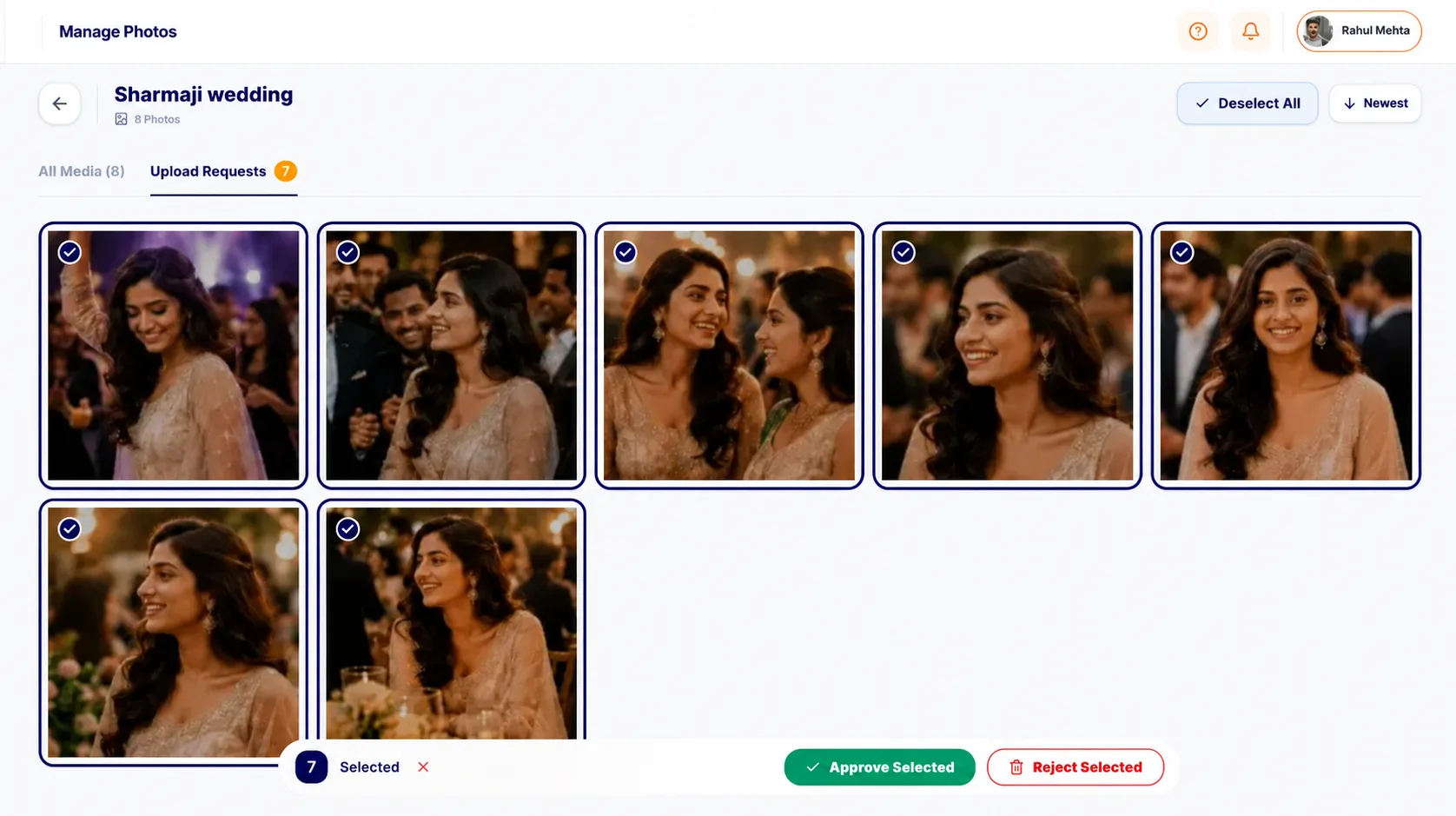
The actual setup is not much complicated. Organizer or photographer creates an event on the platform, uploads all photos, and then a shareable link or QR code gets generated for that event. This link is what gets distributed to all guests.
Now the thing is, guests does not need to install any app. They just open the link on their phone browser, click a selfie using their front camera, and the AI instantly shows them only those photos where they appear. The whole thing works on any browser, mobile or desktop.
For bigger events like marathons or college fests where thousands of photos are involved, this system saves enormous time. Guests who earlier gave up after scrolling through 300 photos now get their personal gallery in under 30 seconds.
Which Events Benefit the Most from This Technology
Weddings are the most obvious use case. Wedding has 300 guests, photographer shoots 2,000 photos. Nobody has time to send individual photos to every family. With face recognition based sharing, every guest gets their own set of photos from the wedding itself, only the ones where they actually appear.
Corporate events and conferences also use this heavily now. Company organizes a summit with 500 attendees. Instead of sending mass gallery link, each attendee finds only their own professional photos. Looks much more organized and premium.
Marathon and sports events were actually early adopters of this technology. Runners get photos matched to them by face. Very useful when photographer has clicked 20,000 photos across entire race track.
Wedding, School and college events, graduation ceremonies, alumni meets, all these work well with face recognition sharing. University alumni reunion with 5,000 people cannot be managed manually on. Face recognition handles it automatically.
Key Things to Look for When Choosing a Platform
When picking a platform to share event photos using face recognition, accuracy matters most. Platform should work even in poor lighting or for side-face photos. A free trial is useful before committing to any paid plan for actual events.
Also check if platform works without app installation. Guests who need to download an app will simply not bother. Browser-based platforms have much higher guest participation rate.
Custom branding options, watermarks, and white-label gallery links are useful for professional photographers who want to maintain their studio identity across all client deliveries. This is especially useful for wedding photographers who want every guest to see their brand name on the gallery.
If you are also interested in how photographers manage large photo galleries before sharing, you can read more about event photo management workflow to understand the full process.
FAQ
Q. What is face recognition based photo sharing for events?
It is a method where guests upload a selfie on the event gallery page and AI technology matches their face with all photos taken at the event. Guests see only those photos where they appear. No manual sorting needed. It works on browser directly without any app installation required, so the adoption is quite smooth even for older guests.
Q. Is it safe to use face recognition to share event photos?
It depends on the platform. Responsible platforms process face data only for matching purpose and delete it after the event. Before choosing any service, check their privacy policy and confirm that biometric data is not sold or shared with third parties. Guest consent screen before selfie capture is a minimum requirement for any trustworthy platform.
Q. Do guests need to install an app to find their photos?
Not on most modern platforms. The best face recognition photo sharing services work directly on mobile browser. Guests just open a link or scan QR code, click selfie, and find their photos instantly. This no-app approach is very important for real-world events where not everyone will install something.
Q. How accurate is face recognition for event photo sharing?
Accuracy varies by platform but the good ones claim above 99% even for group photos, masked faces, and side profiles. The AI uses facial geometry points rather than just appearance, so it handles various lighting conditions and angles well. However, very blurry photos or extremely low resolution images can sometimes reduce accuracy.
Q. Can face recognition handle thousands of photos for a large event?
Yes. This is actually where face recognition is most useful. A marathon with 20,000 photos or a wedding with 3,000 images would be completely unmanageable manually. AI processes thousands of photos quickly and guests get matched results in seconds even on. Large scale events are the primary use case for this technology.
Q. What types of events work best with face recognition photo sharing?
Weddings, corporate conferences, marathons, college fests, graduation ceremonies, alumni reunions, school annual days. Basically any event with large number of attendees and high photo volume benefits from this technology. Even smaller private parties use it now because the setup is simple and guests always love the instant photo experience.
Wrapping Up
Sharing event photos the old way, through WhatsApp groups or Google Drive folders, creates more work for organizers and more frustration for guests. Face recognition based photo sharing solves this cleanly. Guests find their photos fast, organizers spend less time on distribution, and photographers deliver a premium experience without extra effort. For anyone regularly handling event or wedding photography, this technology is worth exploring seriously.
Suggested Link - event photo management tips